

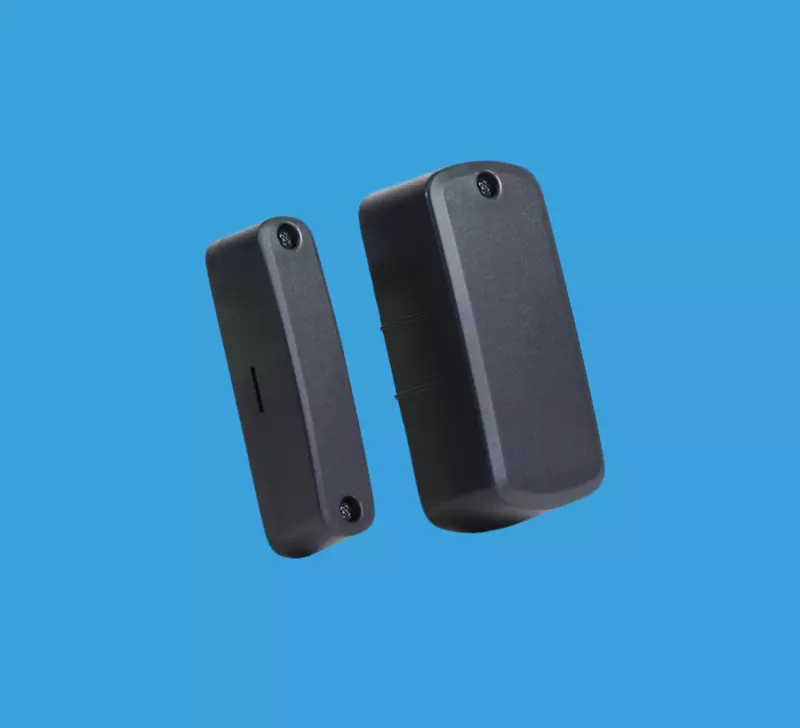
The 2GIG DW30-345 eSeries Encrypted Outdoor Contact Sensor is a 345 MHz wireless sensor designed to monitor outdoor gates, doors, windows, sheds, detached garages, and other exterior openings. It features encrypted communication, wide-gap support, outdoor-rated performance, and dual-zone capability for compatible 2GIG alarm systems.
2GIG DW30-345 eSeries Encrypted Outdoor Contact Sensor
The 2GIG DW30-345 eSeries Encrypted Outdoor Contact Sensor is designed to help extend alarm protection to outdoor doors, gates, detached garages, sheds, pool gates, and other exterior openings. This sensor sends a signal to a compatible alarm panel when the protected opening is opened or closed, helping provide security awareness beyond the interior of the property.
Operating on the 345 MHz wireless frequency, this outdoor contact sensor is part of the 2GIG eSeries encrypted sensor line. It is designed for applications where a standard indoor door/window contact may not be suitable, especially outdoor areas, wide-gap openings, and locations exposed to harsher conditions.
Compatible Alarm Systems
The 2GIG DW30-345 eSeries Encrypted Outdoor Contact Sensor is designed for compatible 2GIG alarm panels that support 345 MHz eSeries encrypted wireless sensors. It is commonly used with supported 2GIG systems for outdoor gate, door, and window protection.
Compatibility should be confirmed before ordering, especially when adding this sensor to an existing alarm system or replacing a non-encrypted outdoor contact.
Designed for Outdoor Protection
This sensor is made for exterior alarm applications where indoor contacts may not be the right fit. It can be used to monitor outdoor gates, pool gates, side gates, sheds, detached garage doors, exterior storage doors, and other outdoor openings that need alarm protection.
Encrypted 345 MHz Wireless Communication
As part of the 2GIG eSeries line, the DW30-345 uses encrypted wireless communication to help improve signal security between the sensor and the compatible 2GIG alarm panel. This makes it a strong option for systems where encrypted sensor communication is preferred.
Wide-Gap Outdoor Sensor Design
The outdoor contact design is ideal for openings where a standard contact may not align properly. Its wide-gap capability makes it useful for gates, oversized doors, detached structures, and other installations where the sensor and magnet may need more spacing than a typical indoor contact allows.
Dual-Zone Capability
The DW30-345 supports two unique zones. One zone uses the internal magnetic reed switch, while the second zone can use a normally-closed external circuit for a compatible wired device. This gives installers more flexibility for certain outdoor alarm applications.
Ideal For
- Outdoor gates
- Pool gates
- Side yard gates
- Detached garage doors
- Sheds and storage buildings
- Exterior doors and windows
- Wide-gap openings
- Residential outdoor alarm protection
- Small business exterior openings
- Compatible 2GIG eSeries alarm systems
Key Features
- 2GIG DW30-345 eSeries encrypted outdoor contact sensor
- 345 MHz wireless frequency
- Designed for compatible 2GIG alarm panels
- Encrypted wireless communication
- Outdoor contact sensor for gates, doors, windows, and detached areas
- Wide-gap design for larger openings
- Supports two unique zones
- Internal magnetic reed switch
- Normally-closed external circuit support for compatible wired devices
- Up to 350 ft open-air wireless range
- Up to 5-year battery life
- Paintable housing to better match the mounting surface
Important Compatibility Notice
Before purchasing, please confirm that your alarm panel supports 345 MHz 2GIG eSeries encrypted wireless sensors and is compatible with the 2GIG DW30-345.
This sensor is not a universal outdoor contact. It is not intended for Honeywell/Resideo 5800 Series, Qolsys 319.5 MHz, DSC 433 MHz, PowerG-only, or other non-compatible alarm systems unless your panel configuration specifically supports this sensor type.
Programming may require installer access to your alarm panel. Wireless range, outdoor performance, magnet spacing, external input use, and sensor supervision may vary based on panel model, firmware, mounting location, weather exposure, and system programming.